
When Trust Becomes Your Most Valuable Asset
Every client relationship you have is built on one thing: trust. Not your credentials. Not your pitch deck. Not even your results — at least not at first. Before a client signs, before they refer you, before they stay with you through a market shift, they have to believe you understand where the world is heading and that you have a system to get them there.
Right now, the world is moving fast. Industries are restructuring. Leadership pipelines are changing. AI is reshaping how professionals work and learn. And in aviation — an industry at the center of global commerce — history is being made. The entrepreneurs who will thrive through all of it are the ones who have built relationships sturdy enough to survive disruption.
WILL YOUR BUSINESS SURVIVE THE NEXT 5 YEARS?
Find out in 5 minutes. 15 questions. Confidential.
Here is the direct answer: Long-term client relationships are not built through proximity or personality. They are built through demonstrated foresight, consistent delivery, and the kind of structural thinking that makes clients feel safer with you than without you. That is the standard every serious entrepreneur must hold themselves to.
What Structural Shifts Tell You About Client Loyalty
Consider what is happening in India's metals industry. According to a thematic report by Ashika Institutional Equities, India's next metals growth cycle will be driven by recycling rather than mining, with scrap emerging as the industry's most strategic resource. The report, titled "Recycling: The New Ore," describes a multi-year structural shift already underway.
Think about that framing. The resource was always there. The value is now being recognized. The same principle applies to your client base. Your most loyal, highest-value clients are not always the newest ones. They are the ones you have consistently re-engaged, re-invested in, and re-served as their needs evolved. Long-term relationships are not a soft metric — they are a strategic resource.
Entrepreneurs who treat client relationships as a recurring asset — not a one-time transaction — position themselves for compounding returns. That is not a motivational idea. That is a structural business model.
Leadership Investment Signals Organizational Seriousness
When a company appoints senior leadership to protect its people strategy, it sends a clear signal to clients, partners, and talent: we are building for the long term. Triveni Turbine Limited recently demonstrated this by appointing Shashwat K Mitra as Chief Human Resources Officer Designate, bringing over 20 years of experience across engineering, business transformation, and organizational development.
This move matters beyond the headlines. It tells clients that Triveni is investing in the systems and people required to scale without losing quality. For entrepreneurs, the lesson is identical. When you invest in your own leadership development — your coaching, your financial systems, your strategic advisors — you are making the same signal to your clients. You are saying: I am building something durable, not just chasing this quarter's revenue.
Clients notice. And they stay.
Mentorship and Support Systems Accelerate Trust
In Peshawar, the Governor of Khyber Pakhtunkhwa met with representatives of the medical community and assured young doctors of institutional support for their professional development. The emphasis was on equipping emerging professionals with quality education, mentorship, and advocacy within established systems.
This is a universal truth about professional growth: access to the right support structure dramatically compresses the time it takes to reach your goals. Young professionals who have mentors, systems, and communities behind them outperform isolated peers — not because they are more talented, but because they have infrastructure.
For entrepreneurs targeting six-figure income milestones, the question is not whether you need a support system. The question is whether you have built one yet. Coaches, financial strategists, peer communities, and accountability structures are not luxuries. They are the infrastructure of sustainable performance.
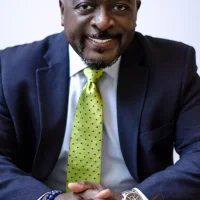
"Trust is not something you earn once — it is something you maintain through every system you build and every commitment you keep. At TKWAY International, we help our clients create the kind of operational and financial infrastructure that makes trust automatic, because when your systems are solid, your relationships follow." — Willie Montgomery, TKWAY International
TO BE A DISRUPTOR, OR BE DISRUPTED — THAT IS THE QUESTION
"The 9th Disruption" — your free copy. Read it before your competition does.
AI Is Changing How Clients Evaluate Expertise
The University of Chicago recently rolled out Claude Enterprise — an AI tool developed by Anthropic — to all students, faculty, and staff. A commentary in The Wichita Eagle raises a pointed question: now that AI is universally available, institutions must articulate more clearly what education is actually for.
Entrepreneurs face the same reckoning. When your clients have access to AI tools that can generate business frameworks, financial models, and strategic plans in minutes, what is your differentiated value? The answer is judgment, relationship, and accountability. AI can produce a plan. It cannot hold you accountable to it. It cannot read the room in a client meeting. It cannot build the trust that makes a client call you first when something goes wrong.
Entrepreneurs who understand this will lean into the human elements of their service — the coaching conversations, the community, the customized guidance — rather than competing with tools that will always generate faster than any human can type.
Historic Leadership in Aviation Sets a New Standard
In aviation, a landmark moment just occurred. IATA has appointed Saadia Zahidi as its next Director General — the first woman and first non-airline industry executive to lead the organization representing more than 370 airlines, according to Aviation Week. She succeeds Willie Walsh on November 1.
This appointment is significant for aviation safety and security professionals. It signals that IATA — a cornerstone institution in global air transport — is broadening its definition of relevant expertise. Leaders from adjacent industries bring frameworks and perspectives that pure sector insiders often miss. For aviation and transit companies building world-class safety and security programs, this is a reminder that the best solutions often come from outside the traditional playbook.
Cross-industry thinking is not a compromise. It is a competitive advantage.
FAQ: Building Client Trust as an Entrepreneur
How do long-term client relationships directly affect revenue stability?
Long-term clients generate recurring revenue, require less acquisition cost, and refer new business at higher rates than one-time clients. According to research from Bain & Company, increasing client retention rates by just 5% can increase profits by 25% to 95%, depending on the industry. Retention is a financial strategy, not just a relationship goal.
What systems help entrepreneurs build trust faster with new clients?
Onboarding processes, clear communication frameworks, and structured accountability check-ins are the three highest-impact systems for early-stage trust. When clients know what to expect and experience consistent follow-through, trust accelerates. Ambiguity is the primary trust killer in new client relationships.
How does AI affect the value of human coaching and consulting?
AI tools can generate information and frameworks rapidly, but they cannot replicate judgment, relational accountability, or context-specific guidance. Coaches and consultants who integrate AI into their workflow while deepening their human-centered skills will increase their value, not lose it. The differentiator shifts from information to interpretation and implementation.
Why do entrepreneurs with mentors and financial systems outperform those without?
Support infrastructure compresses the learning curve and reduces costly trial-and-error. Entrepreneurs with structured financial systems make better capital allocation decisions, while those with mentors navigate inflection points faster. The gap between supported and unsupported entrepreneurs widens over time, not at the starting line.
Your Next Move
The entrepreneurs who reach and sustain six-figure performance are not the ones working harder than everyone else. They are the ones who have built systems — financial, operational, and relational — that work even when they are not in the room. At TKWAY International, Willie Montgomery helps aviation and transit professionals build world-class safety and security programs, and empowers individual entrepreneurs with the financial systems, expert networks, and community infrastructure needed to create lasting lifestyle and legacy outcomes. If you are ready to stop improvising and start building, explore what a structured approach to your business and financial future looks like at TKWAY International.